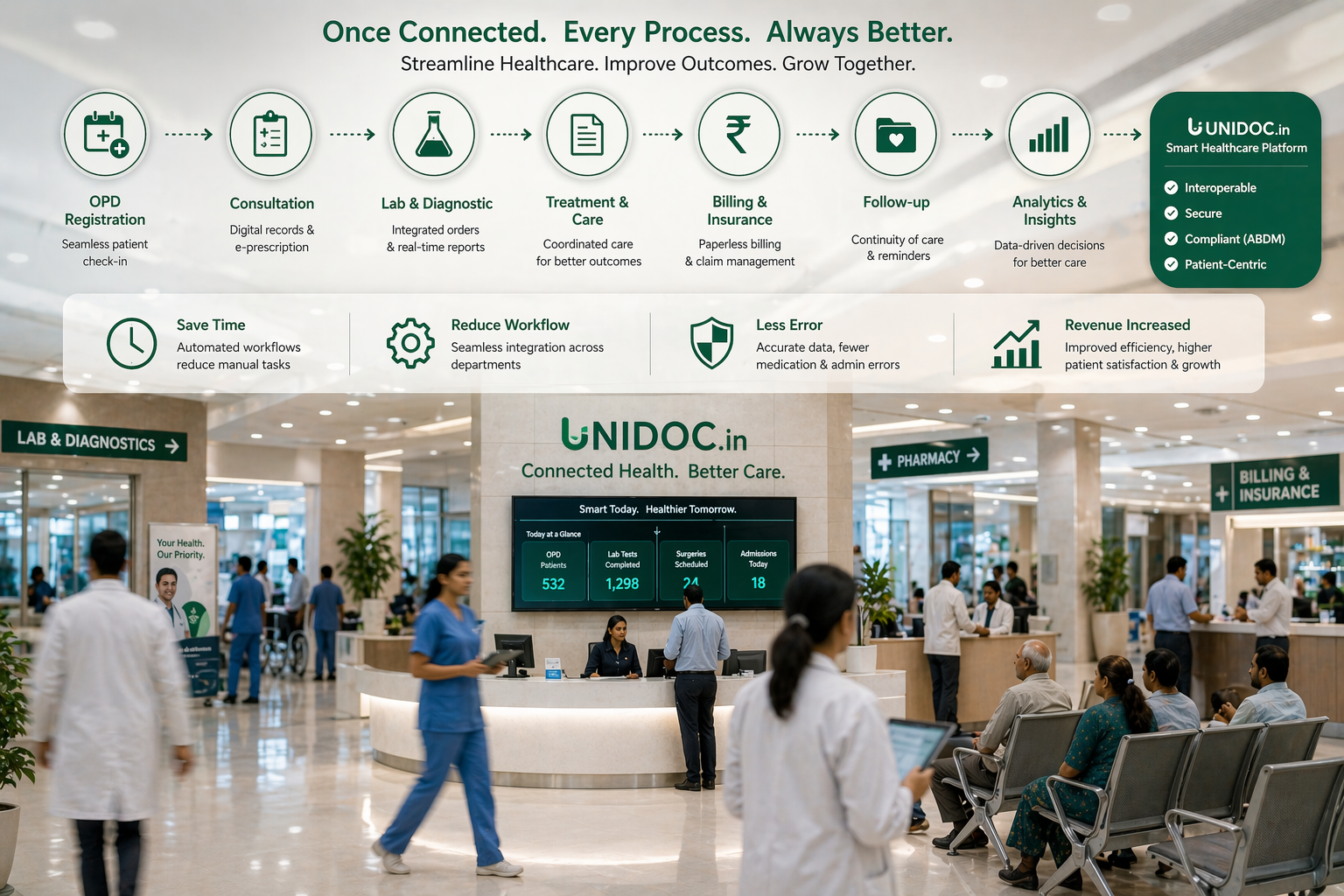
The Emergency Room Problem Nobody Talks About
When a patient arrives in the emergency department, every second matters. Yet clinicians routinely spend 5 to 15 minutes piecing together a patient's medical history — scrolling through disjointed records, calling previous providers, or relying on the patient's own (often incomplete) account.
In critical situations like cardiac events, strokes, or trauma, this information gap can mean the difference between optimal intervention and a missed window. AI-powered patient summaries are changing this equation entirely.
What Are AI Patient Summaries?
An AI patient summary is a concise, automatically generated clinical brief that synthesizes a patient's entire medical history into a structured, scannable document. Instead of reading through hundreds of pages of records, the attending physician receives a focused overview covering:
- Active diagnoses and chronic conditions
- Current medications with dosages and frequencies
- Known allergies and adverse drug reactions
- Recent lab results and imaging findings
- Surgical history and past hospitalizations
- Immunization status and preventive care gaps
The result is a 30-second read that gives the emergency team everything they need to make informed decisions immediately.
How Unidoc's AI Engine Works
Unidoc's clinical AI engine processes patient data across every touchpoint in the healthcare journey. Here is how it generates summaries that clinicians can actually trust:
Multi-Source Data Aggregation
The AI pulls data from OPD visits, IPD admissions, lab results, prescriptions, and nursing notes — all stored within the Unidoc ecosystem. For patients with ABDM-linked records, it can also incorporate data from external facilities, creating a truly comprehensive picture.
Intelligent Prioritization
Not all medical history is equally relevant in an emergency. Unidoc's AI uses clinical relevance scoring to surface the most critical information first. A patient presenting with chest pain will see their cardiac history, current anticoagulant therapy, and recent ECG results prominently highlighted — while routine dermatology visits are deprioritized.
Natural Language Generation
The summaries are generated in clear, clinical language that follows standard medical documentation conventions. No jargon soup, no raw data dumps — just structured, actionable intelligence that mirrors how clinicians think.
Real-World Impact: The Numbers
Healthcare facilities using AI-generated patient summaries report significant improvements across multiple metrics:
- Triage time reduced by 40-60% — Clinicians reach informed decisions faster when history is pre-synthesized
- Medication errors down by 35% — Complete medication lists prevent dangerous interactions in emergency prescribing
- Allergy-related adverse events reduced by 50% — Critical allergies are surfaced prominently, not buried in records
- Patient satisfaction scores up by 25% — Patients feel heard when doctors already understand their history
- Documentation time savings of 20+ minutes per case — Less time reconstructing history means more time for care
A Scenario: Cardiac Emergency
Consider this real-world scenario: A 58-year-old male arrives at the emergency department with acute chest pain and shortness of breath. He is semi-conscious and cannot provide detailed history.
Without AI summary: The team starts from scratch. They run standard protocols while staff tries to reach the patient's primary physician. Precious minutes pass before they discover he is on blood thinners and has a stent placed two years ago.
With Unidoc AI summary: Within seconds of scanning the patient's ABHA-linked QR code or searching by phone number, the attending physician sees a complete brief: previous MI in 2024, drug-eluting stent in LAD, currently on dual antiplatelet therapy, allergic to contrast dye, last echo showing EF of 45%. The team adjusts their protocol immediately.
Beyond Emergency: Daily Clinical Value
While emergency care showcases the most dramatic benefits, AI patient summaries add value across the entire hospital workflow:
- OPD consultations: Specialists reviewing referrals get instant context without requesting records
- IPD admissions: Admitting physicians have complete history for care planning
- Nurse handoffs: Shift transitions become safer with AI-summarized patient status
- Discharge planning: Summary data feeds into automated discharge documents
- Follow-up visits: Doctors see what changed since the last visit at a glance
Integration with Voice-to-Text Notes
Unidoc combines AI summaries with speech-to-text clinical documentation. A doctor can review the AI brief, conduct the examination, and dictate findings — all within a single seamless workflow. The AI then updates the patient's running summary with the new clinical data.
Privacy and Trust: Non-Negotiable Foundations
AI patient summaries work with sensitive health data, which demands the highest privacy standards. Unidoc ensures:
- End-to-end encryption for all patient data at rest and in transit
- ABDM-compliant consent management — no record is accessed without patient authorization
- Role-based access control — only authorized clinicians can view summaries
- Audit trails for every data access, ensuring regulatory compliance
- On-premise deployment options for hospitals requiring local data sovereignty
The Future of Clinical Intelligence
AI patient summaries represent just the beginning of clinical intelligence in healthcare. As Unidoc's AI engine continues to learn from millions of clinical interactions, future capabilities will include:
- Predictive risk scoring for hospital-acquired infections and readmission risk
- Cross-visit pattern recognition to identify emerging conditions before symptoms manifest
- Automated clinical decision support with evidence-based treatment suggestions
- Population health analytics for hospital administrators and public health planning
Want to see AI patient summaries in action? Schedule a demo with Unidoc and experience the future of clinical intelligence at your hospital.