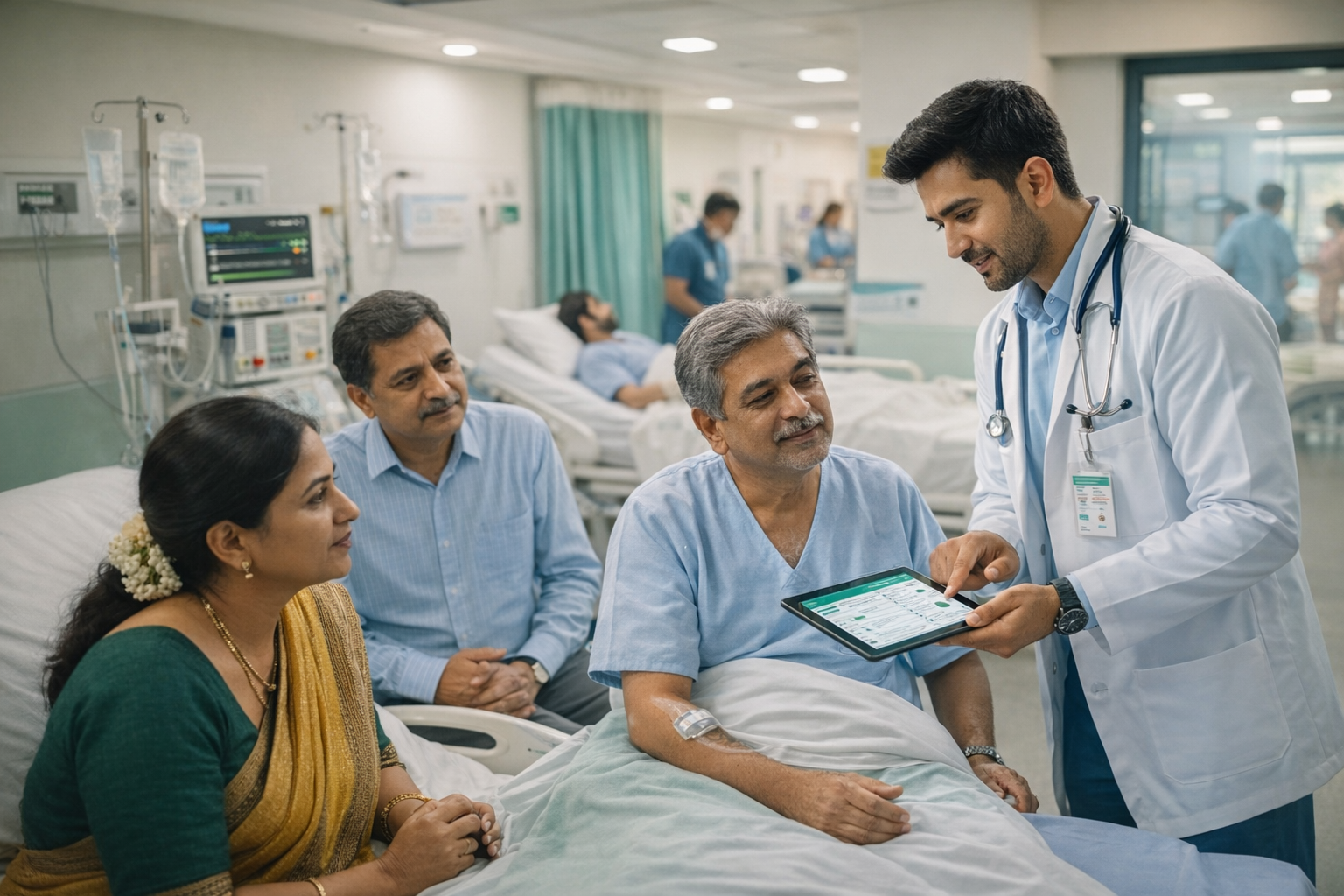
The OPD Bottleneck: India's Biggest Patient Complaint
Ask any patient about their hospital experience, and the first complaint is almost always the same: waiting time. In busy Indian OPDs, patients routinely wait 45 minutes to 2 hours — sometimes longer — for a consultation that lasts 5 to 10 minutes.
This waiting problem is not just a patient satisfaction issue. It has real clinical consequences: overcrowded waiting areas increase infection risk, delayed consultations lead to patient walkouts, and frustrated patients are less likely to comply with follow-up recommendations. For the hospital, every patient who walks out is lost revenue and a missed care opportunity.
Why Traditional Queue Systems Fail
Most Indian hospitals use one of two approaches to OPD queuing, and both are broken:
- Manual token systems: Patients take a number and wait indefinitely. There is no visibility into their position, no time estimate, and no way to leave the waiting area without losing their spot.
- Basic display boards: Slightly better, but still require patients to physically sit in the waiting area watching a screen. No mobile notifications, no real-time updates.
Neither approach accounts for the dynamic reality of a busy OPD — consultations vary in length, emergencies interrupt schedules, and doctors take breaks.
Unidoc's Smart Queue: How It Works
Unidoc reimagines OPD queue management as an intelligent, patient-centric system that benefits everyone — patients, doctors, and administrators.
For Patients: Freedom to Wait Anywhere
When a patient checks in at Unidoc-powered OPD, they receive:
- Real-time position tracking — The patient sees their exact position in the queue and estimated wait time on their phone
- WhatsApp notifications — Automatic alerts when they are 3 patients away, 1 patient away, and when it is their turn
- QR-based check-in — Returning patients scan a QR code and join the queue without visiting the front desk
- Multi-doctor visibility — If the hospital has multiple doctors for the same specialty, patients can see comparative wait times and choose accordingly
This means patients can wait in their car, at the cafeteria, or even run a nearby errand instead of sitting in a crowded waiting room for hours.
For Doctors: Controlled Patient Flow
Doctors gain significant workflow improvements:
- Patient brief before entry — The doctor sees the patient's reason for visit, relevant history, and AI-generated summary before the patient walks in
- Consultation timer — Helps doctors stay on track without feeling rushed
- Priority flagging — Urgent cases can be moved up the queue with one click
- Break management — The system automatically adjusts wait times when a doctor takes a break
- Workload balancing — Administrators can redirect patients between doctors in real-time based on queue lengths
For Administrators: Data-Driven Operations
Hospital administrators get actionable insights:
- Average wait time by doctor, department, and time slot — Identify patterns and optimize scheduling
- Patient no-show rates — Correlate with wait times to understand walkout triggers
- Peak hour analysis — Staff appropriately for high-demand periods
- Revenue impact — Track the relationship between wait times and patient retention
Implementation: Three Real Scenarios
Scenario 1: Single-Doctor Clinic
Dr. Patel runs a dermatology practice in Surat. Before Unidoc, her waiting room was always packed, and patients frequently complained.
After implementation: Patients check in via QR code at the door. They receive a WhatsApp message: "You are #7 in queue. Estimated wait: 35 minutes. We'll notify you when it's your turn." Walk-outs dropped by 40%, and Google ratings improved from 3.8 to 4.5 stars within three months.
Scenario 2: Multi-Specialty Hospital
A 100-bed hospital in Pune with 12 OPD doctors across 8 specialties was struggling with front-desk chaos and long lines.
After implementation: QR-based self-check-in reduced front-desk queuing by 60%. WhatsApp notifications cut physical wait times by 50%. The hospital reported a 15% increase in daily OPD throughput because doctors could see patients faster when the flow was managed intelligently.
Scenario 3: Government Hospital Partnership
A district hospital in Rajasthan used Unidoc's queue system to manage high patient volumes during a dengue outbreak.
Result: Despite a 3x increase in patient load, the system maintained orderly flow, reduced overcrowding in waiting areas, and enabled administrators to dynamically allocate additional doctors to overwhelmed departments.
Beyond the Queue: The Complete OPD Workflow
Smart queue management is just the entry point to Unidoc's comprehensive OPD solution. Once the patient enters the consultation room, the system provides:
- AI patient summary with complete medical history
- Digital prescription with drug interaction checking
- Lab order placement with direct integration to the lab module
- Follow-up scheduling with automatic reminders
- Billing integration for seamless checkout
- ABDM record linking to the patient's ABHA ID
The WhatsApp Advantage
Unidoc's WhatsApp integration extends beyond queue notifications:
- Appointment reminders 24 hours and 1 hour before scheduled visits
- Lab result delivery — Patients receive PDF reports directly on WhatsApp
- Prescription summaries — Medication instructions in the patient's preferred language
- Follow-up reminders — Automated nudges for scheduled follow-up visits
- Feedback collection — Post-visit satisfaction surveys via WhatsApp
ROI: The Business Case for Smart Queues
For hospital administrators evaluating the investment, here is the typical return:
- Patient walkouts reduced by 30-50% — Each retained patient represents revenue
- OPD throughput increased by 10-20% — Better flow means more consultations per day
- Front-desk staffing optimized — QR check-in reduces the need for additional registration staff
- Patient satisfaction scores improve by 30-40% — Leading to better online ratings and word-of-mouth referrals
- Payback period: Most facilities recoup their investment within 2-3 months
Getting Started Is Simple
Unidoc's smart queue management can be operational in your hospital within 48 hours. The implementation includes:
- System configuration — Department setup, doctor schedules, queue rules
- QR code generation — Physical standees for clinic entrances and reception areas
- WhatsApp business integration — Connecting with your hospital's WhatsApp Business API
- Staff training — 30-minute training session for front-desk and clinical staff
- Go-live support — Dedicated support team for the first week
Ready to transform your OPD experience? Talk to the Unidoc team and see how smart queue management can eliminate patient wait time frustrations at your facility.